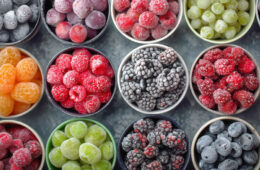
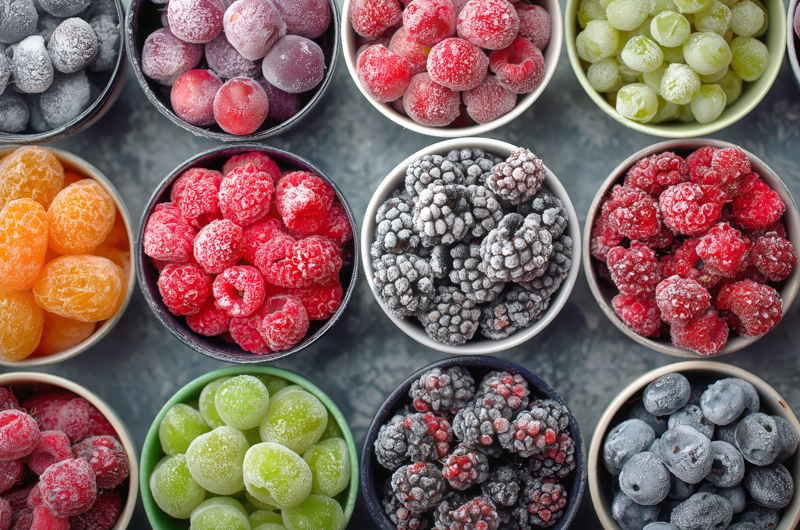
Individual Quick Freezing (IQF) is a modern freezing technology that freezes each fruit or vegetable piece separately and extremely rapidly. This rapid freezing process results in better nutrient retention, improved texture, and enhanced food safety compared to conventional freezing methods.
1. What Makes IQF Different?
IQF technology freezes products so quickly that only very small ice crystals form inside the cells. This prevents the large ice crystals that typically damage cell structures in slow freezing.[¹]
The result: better texture, color, and reduced drip-loss after thawing.
2. Nutritional Advantages of IQF
2.1. Locked-in nutrients at peak ripeness
Fruits and vegetables destined for IQF are typically harvested at peak ripeness and frozen within hours. Rapid freezing at this stage preserves vitamins, minerals, and antioxidant compounds that would normally degrade during transportation of fresh produce.[¹]
2.2. High retention of antioxidants and bioactive compounds
Scientific studies show that IQF can preserve phenolic compounds, vitamin C, and antioxidant activity remarkably well, especially when combined with proper pre-treatments like blanching.[²]
2.3. Comparable or even better nutrition than “fresh” produce
Research indicates that IQF fruits and vegetables can have nutritional profiles equal to — or sometimes better than — fresh produce that has spent several days in storage.[³]
3. Quality, Texture, and Food-Safety Benefits
3.1. Superior texture and color
Because IQF minimizes cellular damage, it preserves structure, reduces drip loss, and maintains natural color during thawing and cooking.[⁴]
3.2. Improved microbiological safety
Freezing stops microbial growth. When IQF is combined with proper cold-chain maintenance, it ensures very high food safety standards over long storage periods.[¹]
3.3. Ideal for global supply chains
IQF allows seasonal fruits and vegetables to be supplied year-round, with consistent portioning and minimal quality loss during export.
4. Process Conditions That Influence Final Quality
Although IQF is a superior technology, its success depends on:
- freezing immediately after harvest
- correct blanching or pre-treatment
- proper freezing rate and temperature
- maintaining –18 °C storage without temperature fluctuations
IQF freezing is scientifically proven to preserve nutrients, antioxidants, texture, color, and safety more effectively than conventional slow freezing.
For international suppliers, IQF provides a reliable method to deliver high-quality produce with “fresh-like” characteristics — making it a preferred standard in the global food industry.